
Consumer Duty is a key piece of consumer protection regulation, yet most consumers have never heard of it. That’s no surprise: most communications about it have been aimed at financial services firms. This webinar asks whether consumers should be informed, who should tell them, and what happens if AI tells them first.
Consumer Duty doesn’t require firms to explain what it is, or what it entitles customers to expect. Compare this with UK GDPR, where every consumer is told about their data rights through a privacy notice. We ask why the Duty is different, since, like any consumer right, it works better when people know about it.
We put forward a proposal for debate: should the sector work with consumer groups and charities to give people plain-English information about the Duty, along with the option of recording their circumstances once and sharing them with every firm they deal with?
Importantly, we consider whether the debate has already been overtaken, as more consumers turn to AI tools to learn about their rights and get help with their complaints. If consumers learn about Consumer Duty from AI rather than from the firms that serve them, what does that do to trust?
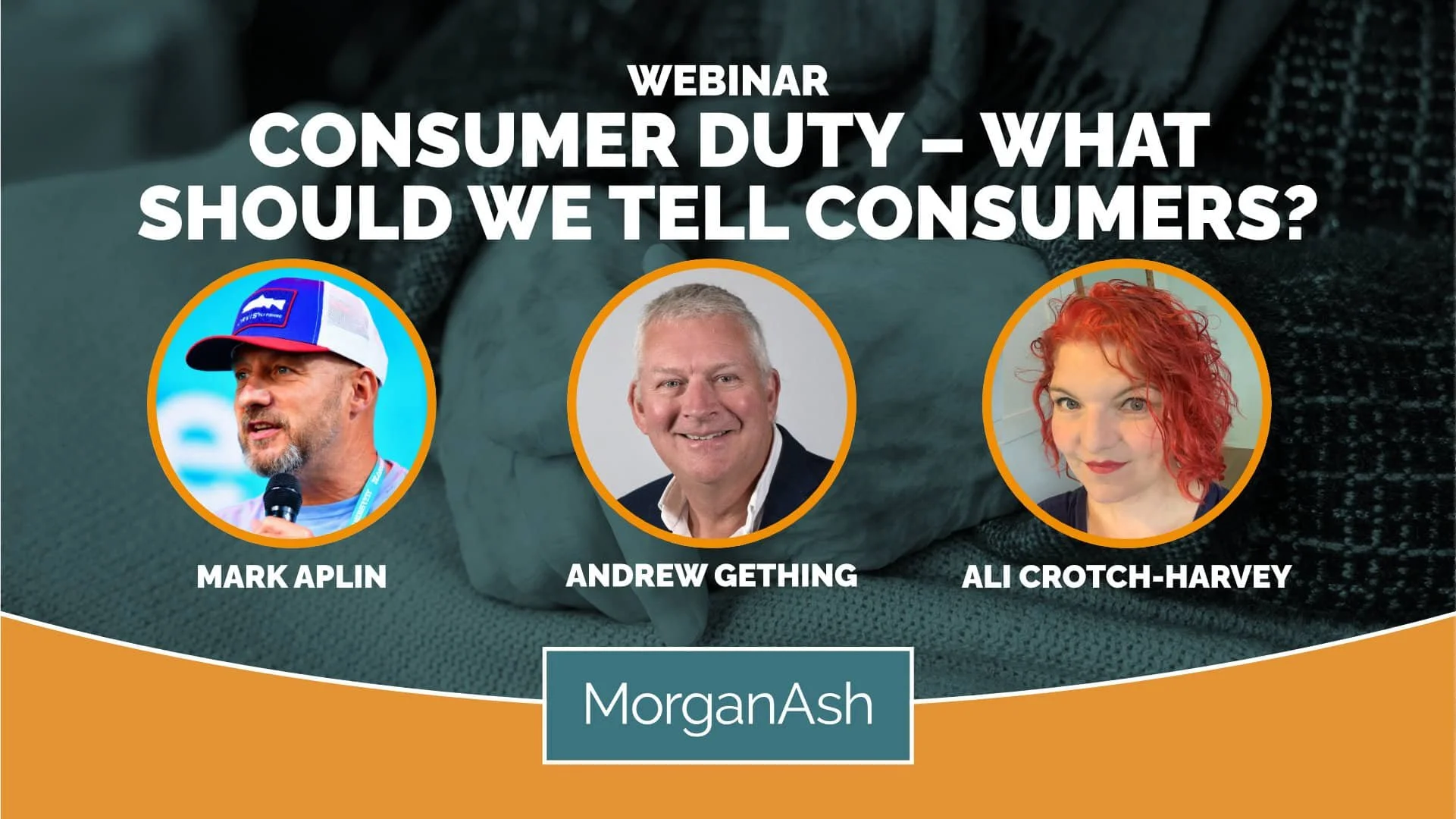
Speakers include Andrew Gething, Managing Director of MorganAsh; Mark Aplin of Signly; and Ali Crotch Harvey of Grant Thornton. The session ends with an open debate, so come ready to share your views.
What Consumer Duty says about consumers – and what was left out
Why we tell people their data rights under GDPR, but not their rights under the Duty
A charity’s view of what the people they support actually know and expect
Why firms struggle to identify customers’ needs – and what happens when they ask
How consumer groups and charities could help people tell firms about their circumstances
A consistent, consumer-held record of circumstances – would it help firms, or just add paperwork?
Whether AI-written complaints have already overtaken the debate – and how to make sure consumers hear accurate information

Ali Crotch-Harvey
Ali Crotch-Harvey is a manager in Grant Thornton UK's Financial Services Regulatory Advisory practice. She has 25 years' experience in financial services regulation and specialises in vulnerability, accessibility, Consumer Duty, non-financial misconduct, whistleblowing and economic abuse. She has several hidden disabilities and draws on that lived experience in her work.

Mark Aplin
Mark Aplin is the co-founder of Signly, a website plugin which lets firms add sign language to their website almost instantly. It provides deaf people with equal access to digital information, advice and services. Signly allows Deaf customers to self-serve, making access to sign language easy – an integrated part of the way an organisation does business.

Andrew Gething
Andrew is the founder and managing director of MorganAsh. He is a recognised consumer vulnerability specialist and champion, is the driving force behind the award-winning consumer vulnerability management tool, MARS.